Starting a Denim Brand? The OEM & ODM Process from Sampling to Production

jchen • October 25, 2026

Clear requirements, documented approvals, and controlled design changes are essential to efficient sampling and consistent production quality.

OEM & ODM: What’s the Difference?

For OEM projects, the brand typically provides designs, patterns, or a tech pack, while the factory supports material assessment, manufacturing, and quality control. ODM involves greater factory participation in style, fabric, fit, and process development. Choose the approach that fits your development resources, schedule, and budget, and agree on responsibilities before starting.

From Inquiry to Delivery: Our Nine-Step Process

1

Consultation & Assessment

Share technical documents, reference samples, and initial requirements to assess feasibility, order quantity, target pricing, and delivery timing.

2

Tech Pack Preparation

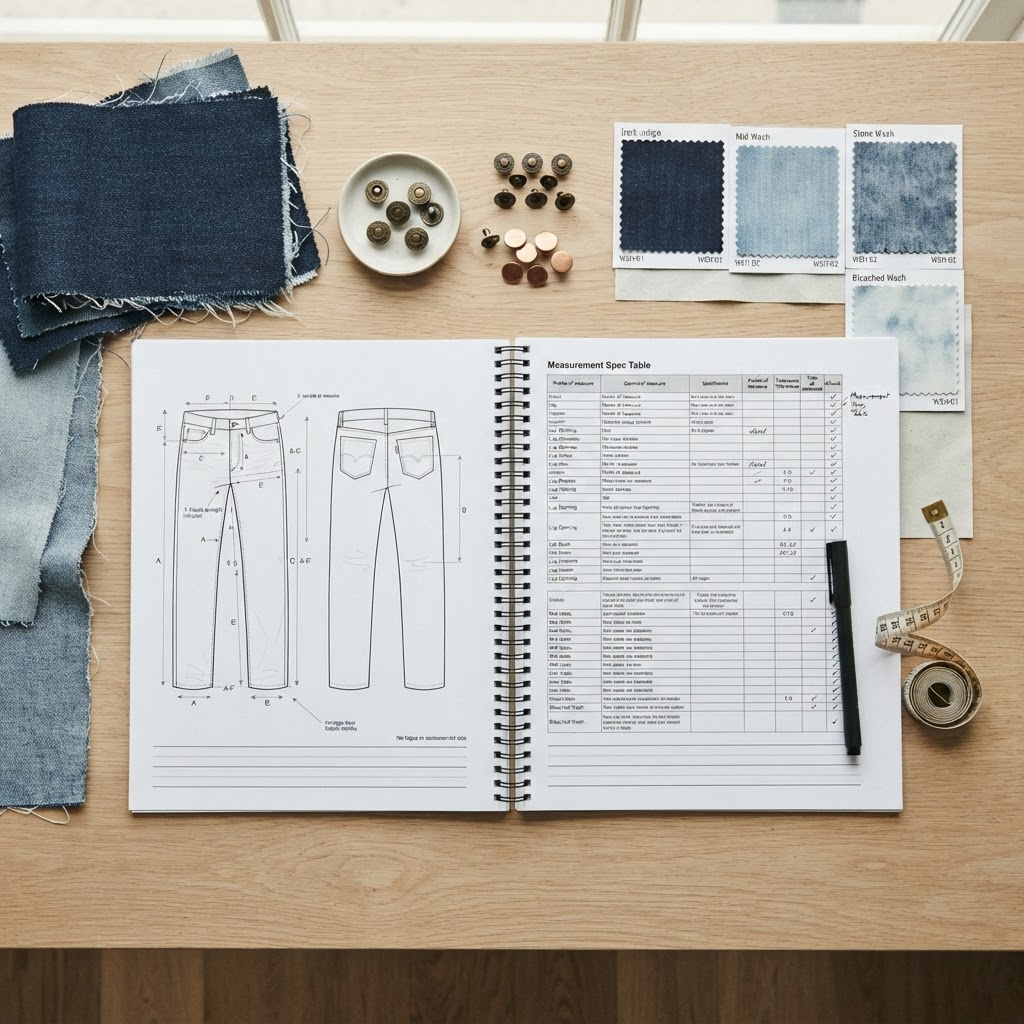
Document measurements, fit, fabrics, washes, stitching, hardware, labeling, and packaging to establish the basis for sampling and approval.

3

Sample Development

Develop patterns, sewn samples, fabric options, and wash trials. Record revisions and versions throughout development.

4

Sample Review & Approval

Review appearance, measurements, fit, and finishing. Consolidate feedback and complete final sample approval.

5

Order & Deposit

Confirm specifications, quantities, unit prices, delivery dates, and payment terms. Place the order and arrange the agreed deposit.

6

Materials & Scheduling

Arrange fabrics, hardware, labels, and packaging. Confirm the production schedule against material arrival dates and available capacity.

7

Bulk Production

Cut, sew, wash, and finish garments according to approved samples and technical documents, maintaining in-process inspection records.

8

Finishing & Quality Inspection

Inspect measurements, appearance, stitching, wash shades, hardware, labeling, and packaging. Set sampling procedures according to the order and customer requirements.

9

Shipping & Delivery

Prepare shipping documents and arrange delivery by sea, air, or another agreed transport method.

Confirm Safety & Labeling Requirements Early

Identify the sales market, product category, and applicable safety and labeling requirements at the start of development. Include fiber composition, care information, and testing requirements in the technical documents. Before production, the brand, factory, and relevant specialists should confirm the applicable requirements and supporting records.

Five Things to Prepare Before Development

  • Prepare a tech pack and reference samples.
  • Assign a single decision-making contact.
  • Set approval deadlines for each stage.
  • Retain approved samples and document versions.
  • Confirm testing and packaging requirements early.

Even if you only have a concept sketch, share your target market, quantity, price range, and desired result. We can help turn your ideas into practical development specifications.

Related Articles

Illustrative image of jeans laid on a wooden table, showing thigh whiskering, distressed knees, and
作者: jchen • October 29, 2026
An illustrative guide to producing distressed jeans, covering damage specifications, seam bulk, size grading, and wash checks for apparel development.
Illustrative image of dark blue, light blue, and gray jeans folded in groups on a wooden table, show
作者: jchen • October 27, 2026
Explore five directions for 2027 denim sourcing, from wide and barrel fits to utility details, subtle flares, and inclusive sizing, with assortment planning insights.
Illustrative image of light blue fabric draped on a pale surface beside a green leaf and beige fiber
作者: jchen • October 23, 2026
Explore lyocell denim development, from softness and drape to fiber testing, blend selection, wash performance, and traceability for responsible sourcing.
Illustrative image of four jeans in different washes arranged on a wooden table, showing whiskering
作者: jchen • October 21, 2026
Explore denim whiskering, laser finishing, stone washing, enzyme washes, acid washes, and garment dyeing, with practical guidance on samples and production.
Illustrative image of stacked jeans in different blue washes, showing folded fabric edges and denim
作者: jchen • October 19, 2026
Compare denim weights from 8–10 oz to 14 oz and above. Explore fabric composition, stretch, construction, and washed samples to select denim for your brand.