Illustrative Case: Bringing Complex Distressed Denim Designs into Production
Illustrative Content Notice
This hypothetical example explains a development process and does not represent an actual client project. Published client cases should use authorized project details, images, and verifiable information.
Project Scenario: An Illustrative Example
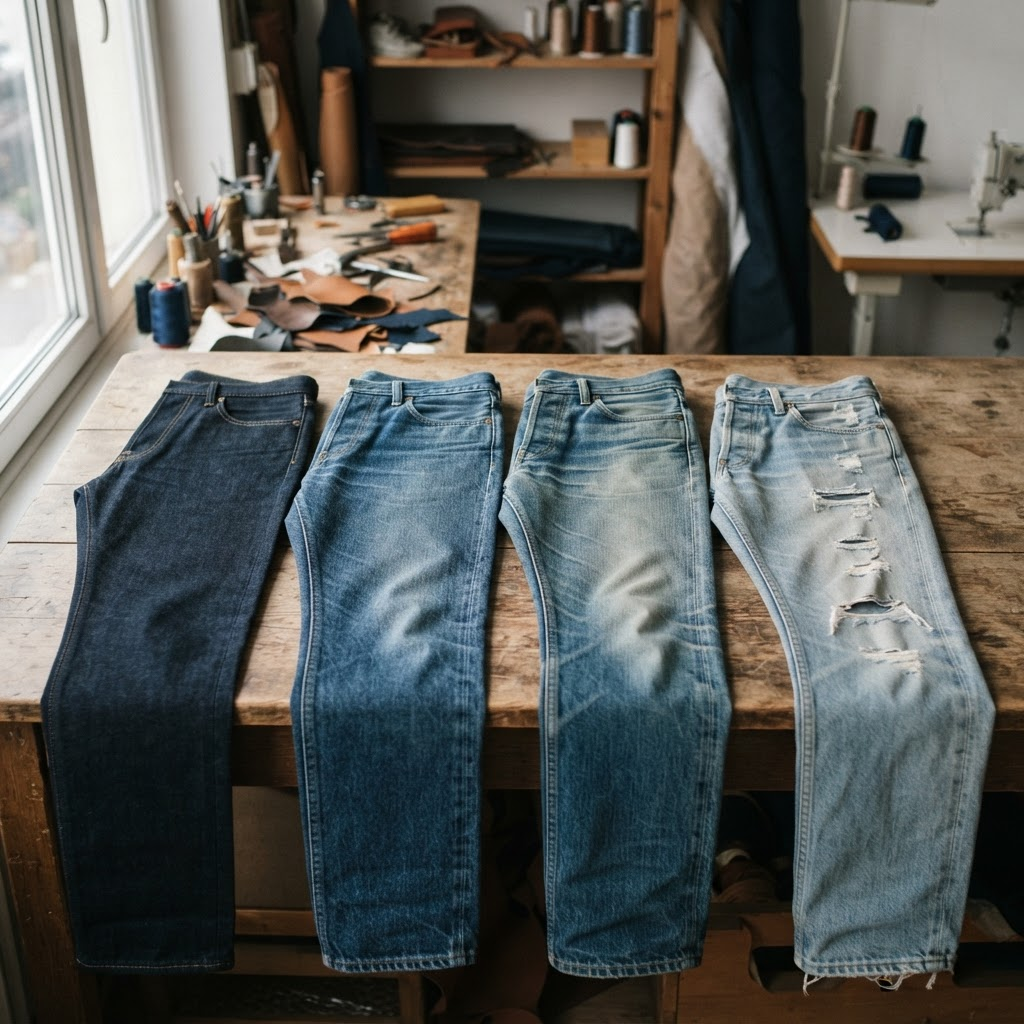
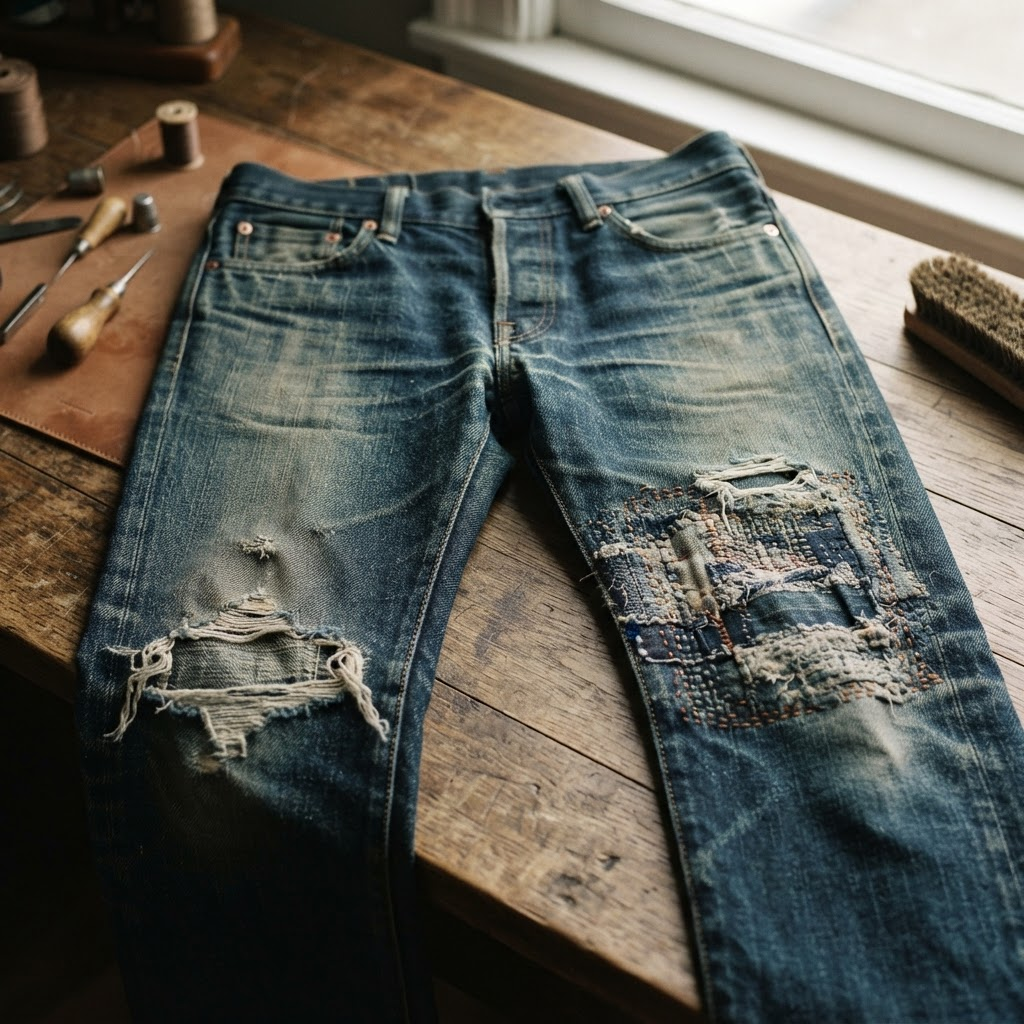
An emerging designer brand planned jeans combining large distressed knee openings, three-dimensional paneling, and a heavily washed finish. The initial sample had strong visual appeal, but the openings enlarged after home laundering, the paneled areas were bulky, and knee placement varied across sizes. The goal was to preserve the design while establishing a repeatable production method.
Challenge 1: Reproducing the Distressed Effect
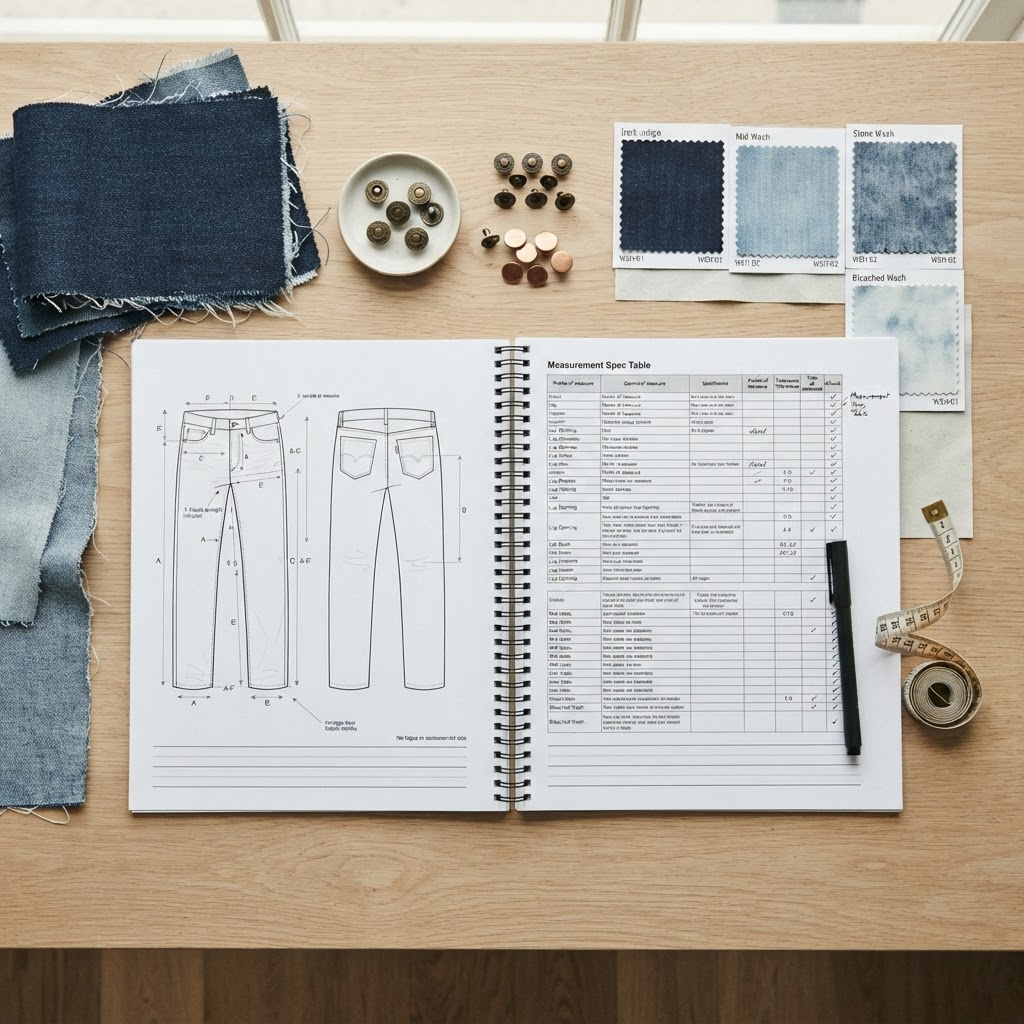
The team defined five criteria: placement, dimensions, retained yarns, edge fraying, and shade. Approved samples established acceptable variations. Concealed reinforcement and securing stitches were added to vulnerable areas, followed by repeated home laundering to assess changes in the openings.
Challenge 2: Bulk and Inconsistent Stitching
Multiple fabric layers and overlapping seams at the knee caused uneven stitching and stiffness. The team retained the three-dimensional appearance while adjusting inner panels, seam allowance directions, and local fabric weights. The sewing sequence was revised to reduce concentrated bulk.
Challenge 3: Maintaining Proportions Across Sizes
Distressing placement was adjusted to the leg length, knee position, and body proportions of each size. The patternmaker revised the grading rules and arranged fit checks in at least two key sizes. Approval combined photographs, measurements, and placement on the wearer.
Outcomes & Evaluation Criteria
An actual case can document sampling rounds, changes after home laundering, final defect rates, and on-time delivery rates, supported by approved samples, production details, and authorized client feedback. Report outcomes using verifiable records. Where records are unavailable, focus on the development process and solutions.
What This Means for Buyers
Producing complex styles starts with translating creative ideas into measurable, reviewable specifications. Early involvement from patternmaking, washing, and production teams helps align cost, quality, and delivery while preserving the design.
For complex constructions, heavy distressing, or designs that are difficult to reproduce consistently, share your sample and development challenges for a production feasibility assessment.
Case Documentation
- 經濟部標準檢驗局:《服飾標示基準》(2023-05-18 生效版本)及紡織品相關檢驗資訊。
- 經濟部標準檢驗局:CNS 15290「紡織品安全規範(一般要求)」相關市場檢測說明。
- Textile Exchange, Materials Market Report 2025。
- Lenzing:TENCEL™ Lyocell 官方產品與閉環製程資訊。
- Première Vision Denim:Spring–Summer 2027 denim materials, dyeing and finishing insights。
- Levi Strauss & Co.:2025 年版型與商品方向公開資料(僅作市場觀察,不作品牌背書)。
This illustrative article does not report actual client outcomes or production data. An actual case should include approved samples, wash-test records, size approval documentation, and authorized photographs.